Best Lovable Alternative That Tests Before It Ships
Rajesh P
March 31, 2026 · 7 min read
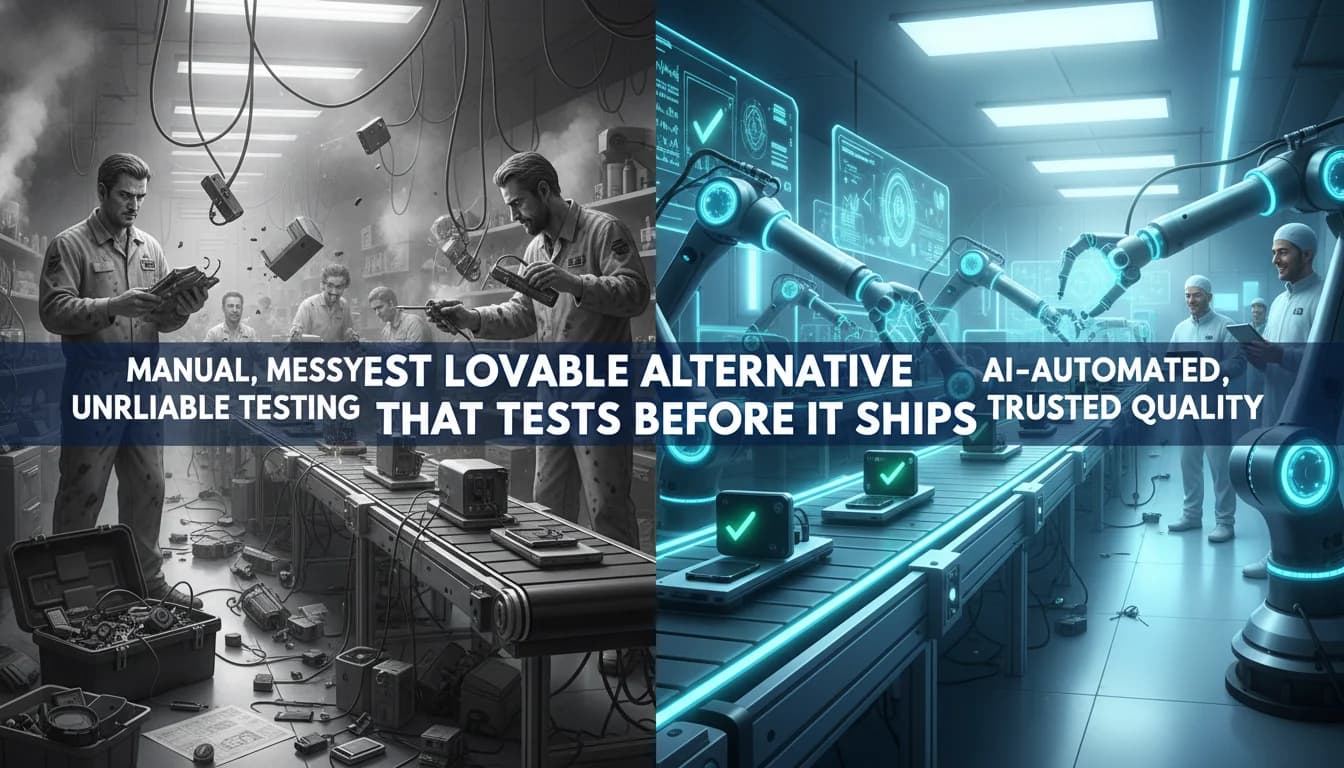
Lovable generates impressive-looking sites from a prompt. The UI comes together fast. The preview looks clean. Then you click a button and nothing happens. Or the form submits but no email arrives. Or the mobile layout is broken in ways you don't notice until a real user complains. If you're searching for the best Lovable alternative with testing, you've probably already run into this exact problem.
The core issue is that Lovable gives you a prototype, not a production site. It generates code and shows you the output. What it doesn't do is verify that anything actually works. No form validation. No button click testing. No mobile rendering checks. You're left to find the bugs yourself, one frustrated click at a time.
What Lovable Gets Right and Where It Stops
Lovable is genuinely good at generating UI from prompts. You describe a landing page, a dashboard, or a sign-up flow, and it produces something that looks right. The design quality is real. The speed is real. That part works.
AI No-Code Website Builder
Build it with CodePup AI. Ready in 30 minutes.
The problem is everything that comes after generation. Lovable doesn't test whether the contact form actually sends an email. It doesn't check if the CTA button triggers the right action. It doesn't verify that the page renders properly on a phone screen. It doesn't scan for broken links.
- Forms that look complete but silently fail on submission
- Buttons wired to event handlers that don't exist
- Navigation menus that break on mobile viewports
- Links pointing to routes that were never created
- Images that load in the editor but 404 in production
These aren't edge cases. They're the most common bugs in AI-generated sites. And Lovable doesn't catch any of them because it doesn't run any tests. Generation ends, and you're on your own.
The Credit Problem: Why Lovable Dev Runs Out Before You're Done
Lovable charges credits for every generation. That sounds reasonable until you realize how the cycle actually plays out. You generate a site. You find a bug. You ask Lovable to fix it. That's another generation. The fix introduces a new issue. Another generation. Three credits gone and you're back where you started.
This is the hidden cost of building without testing. Every bug you catch manually triggers a new round of generation. Every round burns credits. Founders on Lovable's free or starter plans run out of credits before the site is production-ready. Then they're stuck choosing between paying more or shipping something broken.
The credit math only works if the first generation is mostly correct. Without testing, it rarely is. You end up paying three or four times what you expected for a site that still has issues you haven't found yet.
Lovable Alternative 2026: What Auto-Testing Changes
The Lovable alternative that actually solves this problem isn't another UI generator with a different design. It's an AI builder that tests every page, form, and flow before you see the result. The generation step is table stakes now. What matters is what happens between generation and delivery.
Auto-testing means the builder runs your site through real checks before showing you the link. It clicks every button. It submits every form. It loads every page on mobile and desktop viewports. It follows every link and flags the ones that 404. If something breaks, the builder fixes it and tests again.
This changes the economics completely. You don't burn credits on fix loops because the fixes happen before you're involved. You don't file bug reports because the bugs were caught and resolved during the build. The site you see for the first time is a site that already works.
How CodePup Tests Before It Ships
CodePup runs automated testing on every site before you get the link. This isn't a manual QA step or a checklist you have to follow. It's built into the build process itself.
Here's what happens after CodePup generates your site:
- 1Every form on the site is submitted with test data. If the submission fails or the confirmation doesn't trigger, the builder flags it and fixes the wiring.
- 2Every button and CTA is clicked programmatically. Dead buttons get caught and connected to the right handlers.
- 3Every page is rendered at mobile, tablet, and desktop breakpoints. Layout issues are detected and corrected.
- 4Every internal link is followed. Broken links are flagged and repaired before the site goes live.
- 5The full flow is re-tested after fixes to make sure nothing new broke.
You don't see any of this. You describe what you want, and you get back a site that's been tested and fixed. No credit burning on fix loops. No manual bug hunting. No shipping a site and hoping it works.
The difference shows up in the numbers. Sites built with auto-testing have fewer post-launch bugs, lower bounce rates, and higher conversion rates. That's not because the AI is smarter. It's because the bugs get caught before real users hit them.
Ready to build a site that actually works before it ships? Try CodePup's auto-tested builder at codepup.ai/launch/no-code-website-builder. Describe your site, and get back something that's been tested end to end.
Ready to build this?
Start with a template built for your use case.
More from the blog
Ready to build with CodePup AI?
Generate a complete, tested website or app from a single prompt.
Start Building